
碳排放精准表征
-

CEADS合作:1995年-2015年国际移民的隐含碳排放
今日国际知名学术期刊《环境科学与技术》(Environmental Science Technology)正式发表了题为《CO2 Emissions Embodied in International Migration from 1995 to 2015》的研究论文。该论文由广东工业大学、复旦大学、清华大学、北京师范大学、英国东英吉利大学等单位有关团队合作完成,广东工业大学梁赛为第一作者,复旦大学王玉涛、清华大学关大博为共...
-

CEADs合作:亚太区域内外贸易隐含的环境-社会-经济足迹分析
2020年9月8日,国际知名学术期刊《自然-通讯》(Nature Communications)在线发表了题为《Environmental-Social-Economic Footprints of Consumption and Trade in the Asia-Pacific Region》 研究论文(Research article),该研究创新性地从自然资源、本地和全球环境挑战、社会经济影响三个维度构建了可持续发展足迹指标体系,基于多区域投入产出分析方法揭示了研究...
-
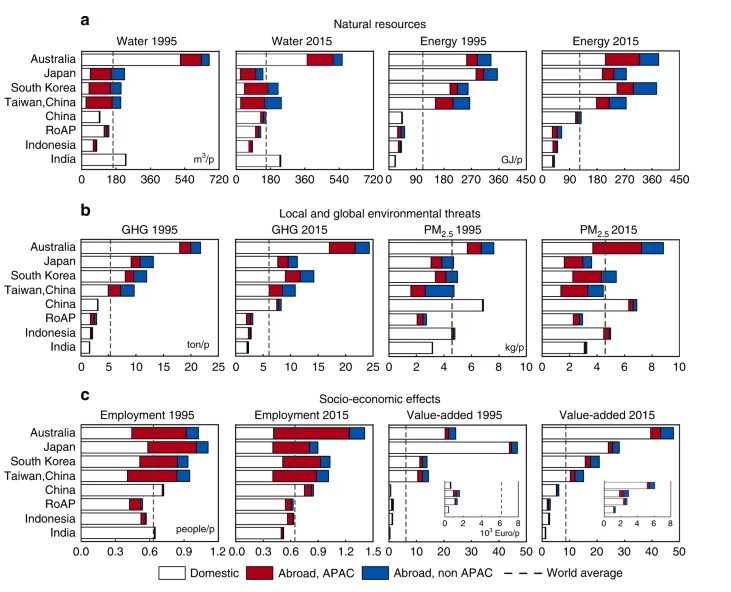
Environmental-social-economic footprints of consumption and trade in the Asia-Pacific region
Asia-Pacific (APAC) has been the world’s most dynamic emerging area of economic development and trade in recent decades. Here, we reveal the significant and imbalanced environmental and socio-economic effects of the region’s growths during 1995-2015. Owing to the intra-regional trade of goods and services, APAC economies grew increasingly interdependent in each other’s water and energy use, greenhouse gas (GHG) and PM2.5 emissions,...
-
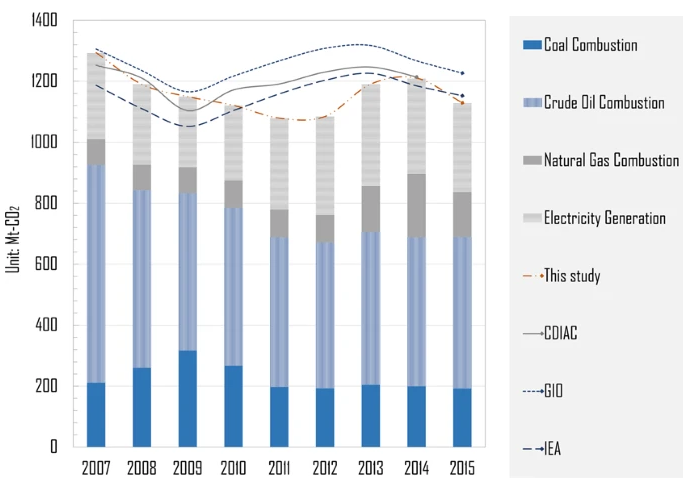
Japan prefectural emission accounts and socioeconomic data 2007 to 2015
In the wake of the Fukushima nuclear disaster, Japanlargely moved away from nuclear power generation and turned back towards anenergy sector dominated by fossil fuels. As a result, the pace towards reachingemission reduction targets has largely slowed down. This situation indicatesthat higher emissions will continue to be generated if there is no appropriateand efficient measurement implemented to bridge the energy demand gap. Tocontribu...
-
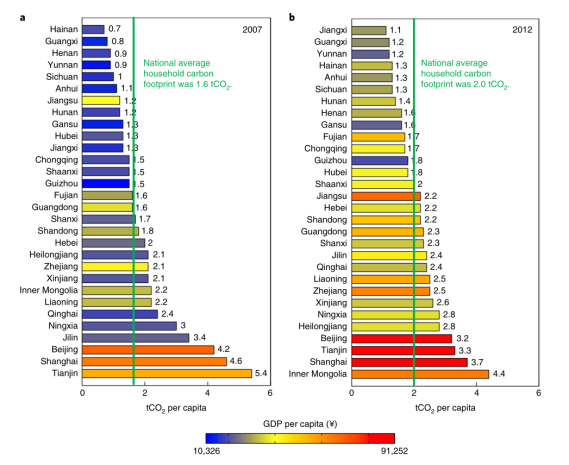
Economic development and converging household carbon footprints in China
There are substantial differences in carbon footprints across households. This study applied an environmentally extended multiregional inpu-output approach to estimate household carbon footprints for 12 different income groups of China’s 30 regions. Subsequently, carbon footprint Gini coefficients were calculated to measure carbon inequality for households across provinces. We found that the top 5% of income earners were responsible f...
-
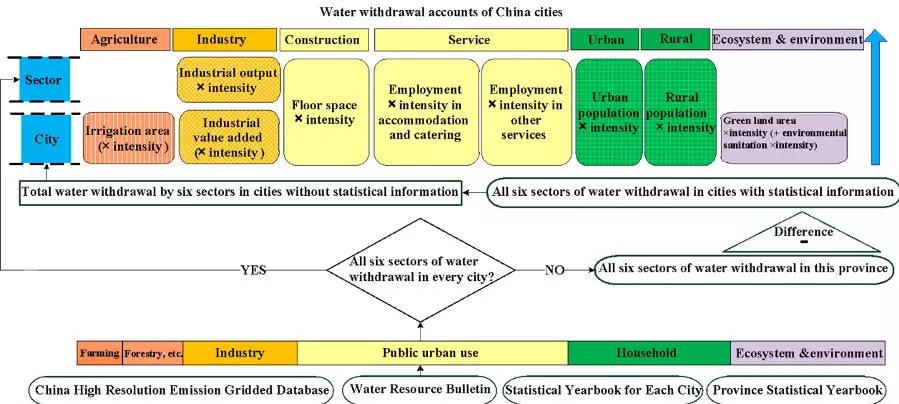
City-level Water Withdrawal in China: Accounting Methodology and Applications
In the context of the freshwater crisis,accounting for water withdrawal could help planners better regulate water usein different sectors to combat water scarcity. However, the water withdrawalstatistics in China are patchy, and the water data across all sectors at thecity level appear to be relatively insufficient. Hence, we develop a generalframework to, for the first time, estimate the water withdrawal of 58economic-social-environmen...
-

CEADs研究:中国城市级多部门取水量核算方法及应用
水资源稀缺是中国的基本国情。约三分之二的城市面临水资源需求与供给的矛盾,成为制约经济、社会和环境可持续发展的重要因素。虽然中国已经在2011年实行了最严格的水资源管理制度,然而直到2017年12月份才陆续有城市安装水表来全面计量城市的取水量。中国取水量的统计捉襟见肘,城市级别、涵盖多部门的取水量数据仍然也显...
-
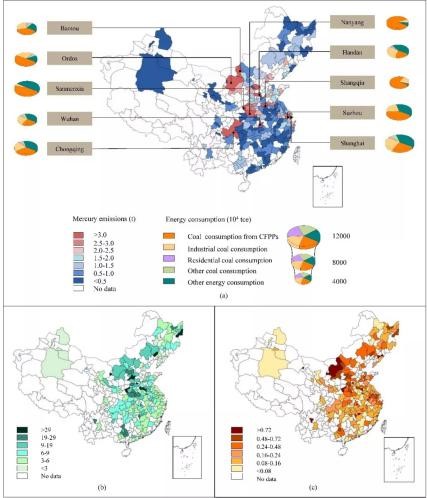
A city-level inventory for atmospheric mercury emissions from coal combustion in China
Cities are essential entities for dedicatedmercury control policies. However, the city-level mercury emission inventory asthe cornerstone of proper policy design is still in its infancy, due to dataavailability. For the first time, this study developed a comprehensivecity-level atmospheric mercury emission inventory from coal combustion in Chinain 2010, by updating emission factors based on high-resolution information suchas the plant-s...
-
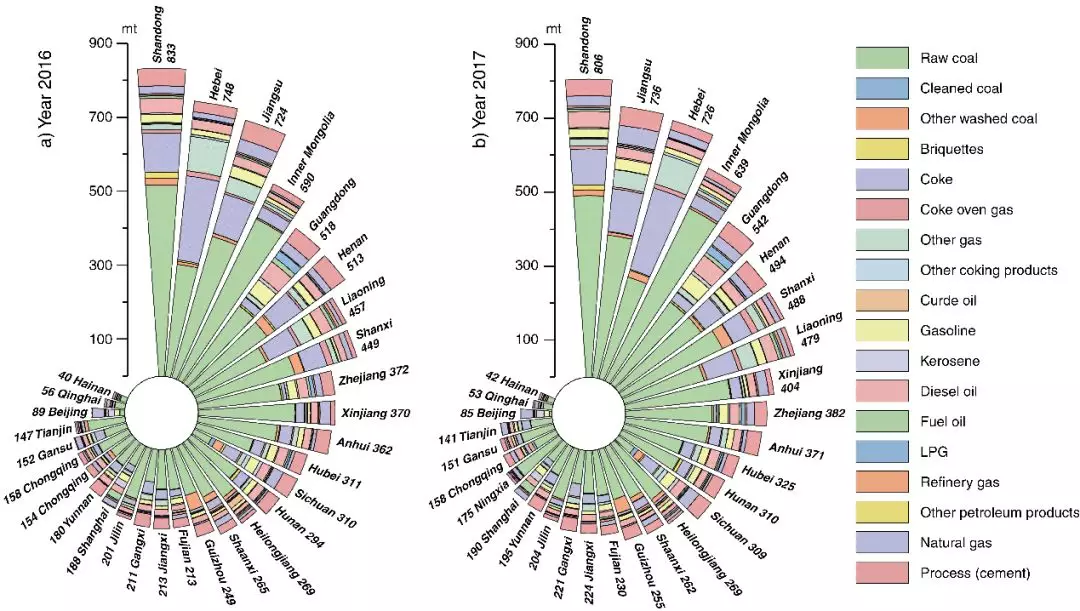
China CO2 emission accounts 2016-2017
Despite China’s emissions having plateaued in 2013, itis still the world’s leading energy consumer and CO2 emitter, accounting forapproximately 30% of global emissions. Detailed CO2 emission inventories byenergy and sector have great significance to China’s carbon policies as well asto achieving global climate change mitigation targets. This study constructsthe most up-to-date CO2 emission inventories for China and its 30 provinces...
-
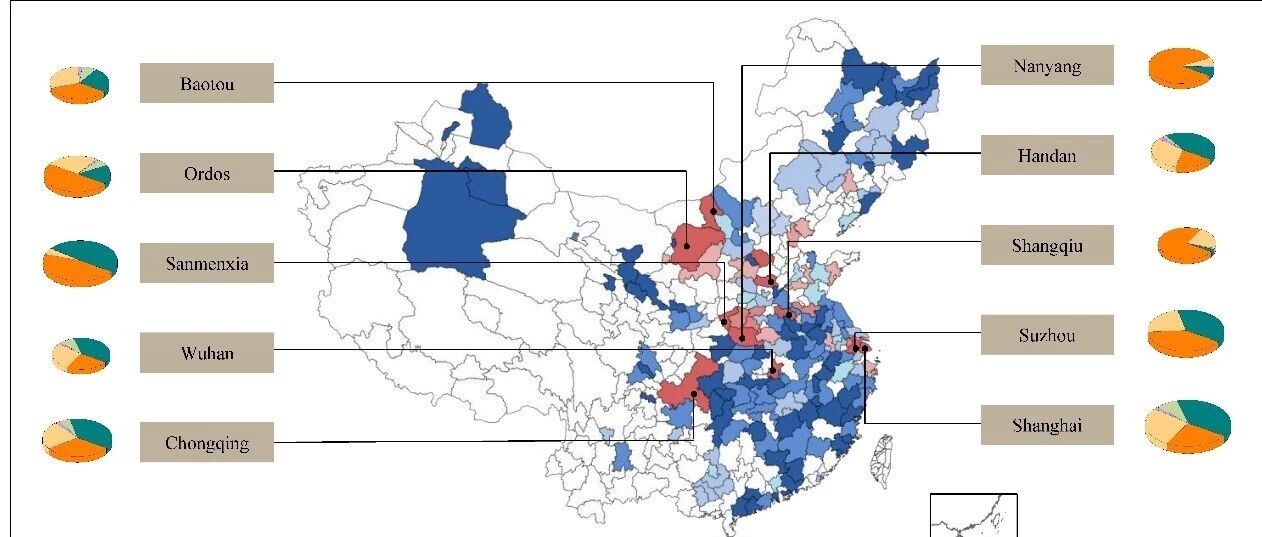
CEADs研究:探究中国地市级燃煤部门大气汞排放
汞是一种重金属污染物,由于其具有远距离运输、生物累积性、毒性,对人类和自然环境构成了严重威胁。作为全球最大的汞排放国和煤炭消费国,中国超过三分之一的汞排放来源于燃煤部门。面对严峻的汞污染形势,许多学者致力于编制汞排放清单,从区域和行业的视角揭示我国汞排放分布及其减排潜力。但是,以往的研究大多集中...