
多尺度差异化气候减缓路径
-
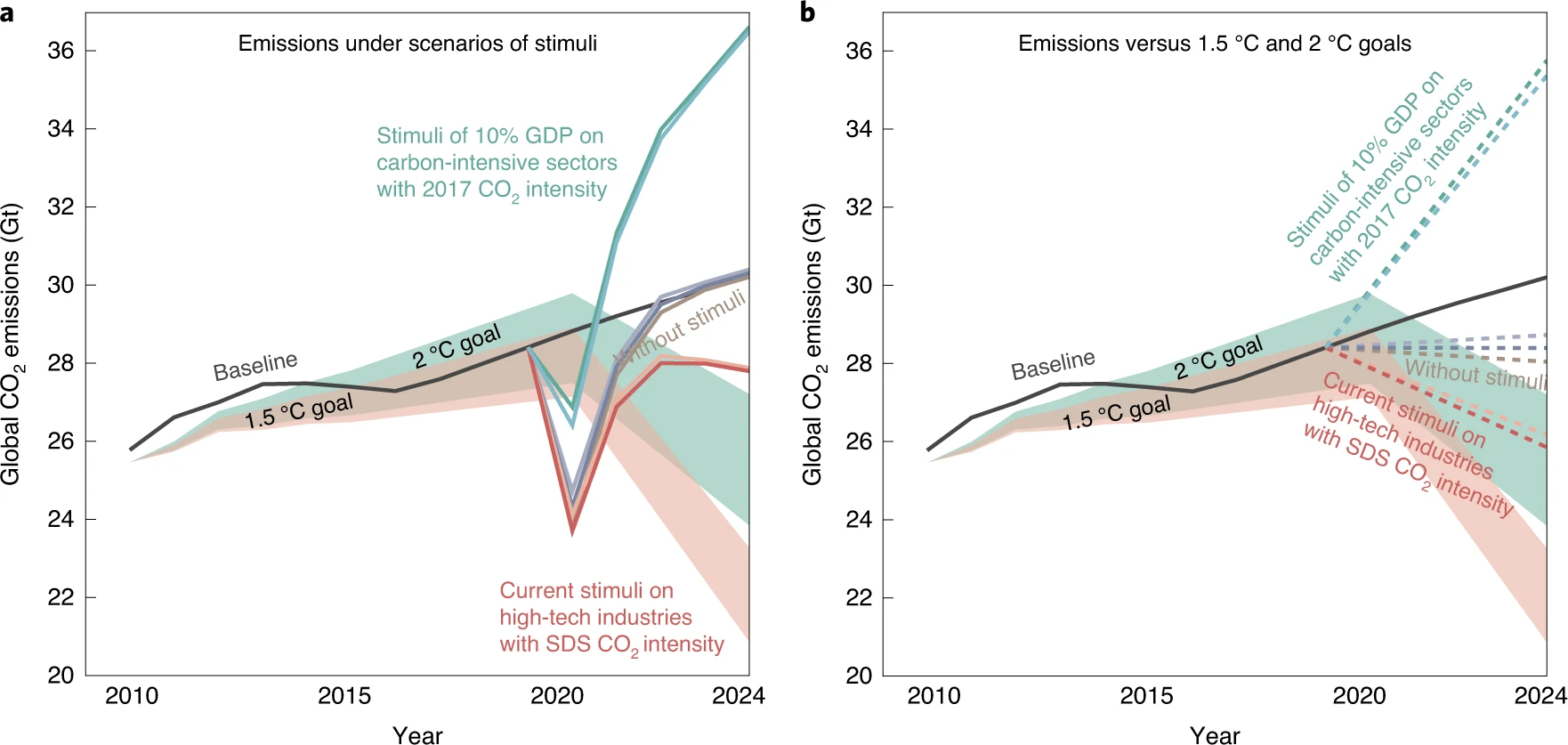
Impacts of COVID-19 and fiscal stimuli on global emissions and the Paris Agreement
The global economy is facing a serious recession due to COVID-19, with implications for CO2 emissions. Here, using a global adaptive multiregional input–output model and scenarios of lockdown and fiscal counter measures, we show that global emissions from economic sectors will decrease by 3.9 to 5.6% in 5 years (2020 to 2024) compared with a no-pandemic baseline scenario (business as usual for economic growth and carbon intensity dec...
-
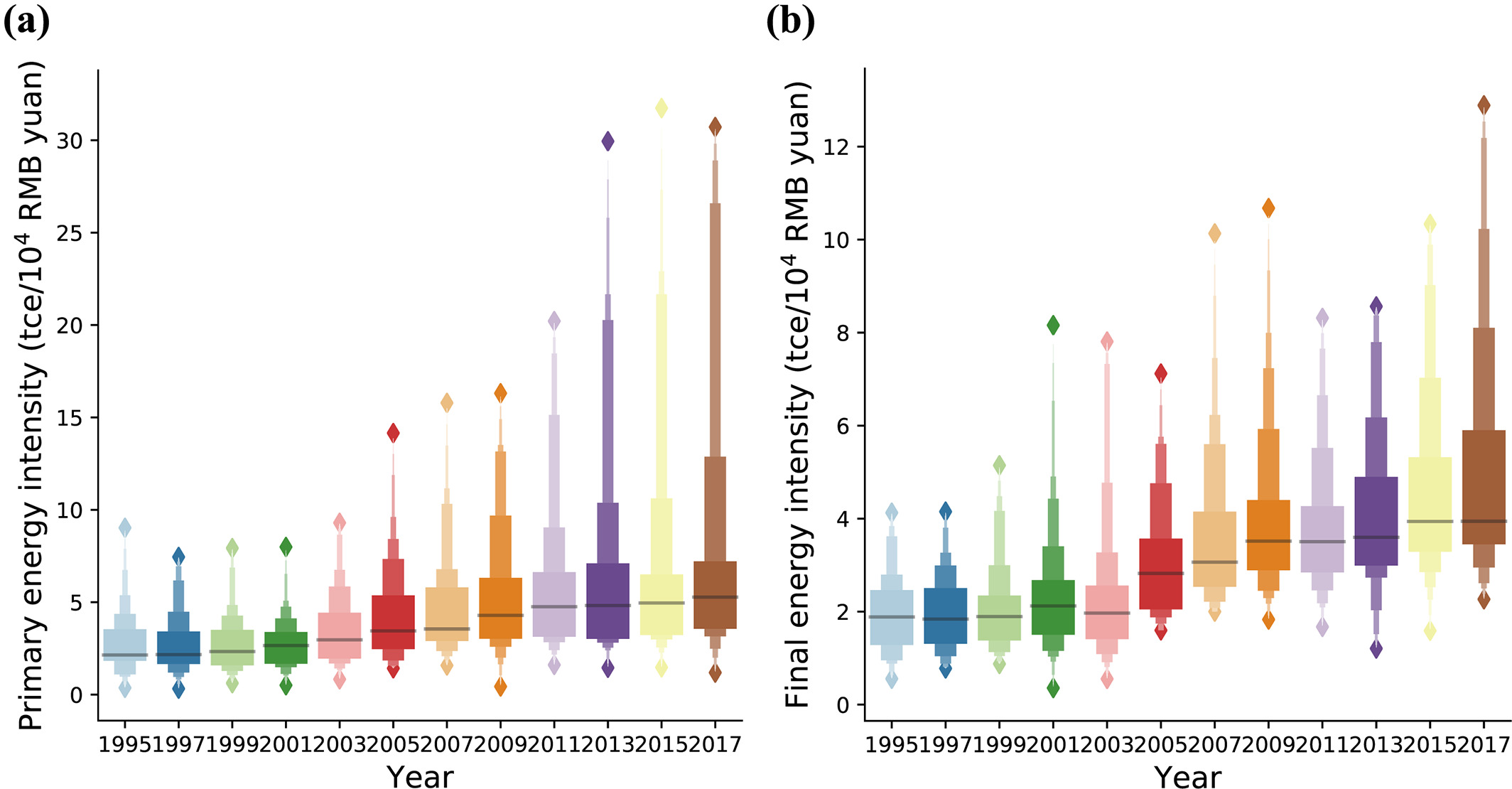
Enlarging Regional Disparities in Energy Intensity within China
As energy saving and emission reduction become a global action, the disparity in energy intensity between different regions is a new rising problem that stems a country's or region's energy-saving potential. Here we collect China's provincial panel data (1995–2017) of primary and final energy consumption to evaluate China's unequal and polarized regional pattern in energy intensity, decompose the inequality index into contributing com...
-
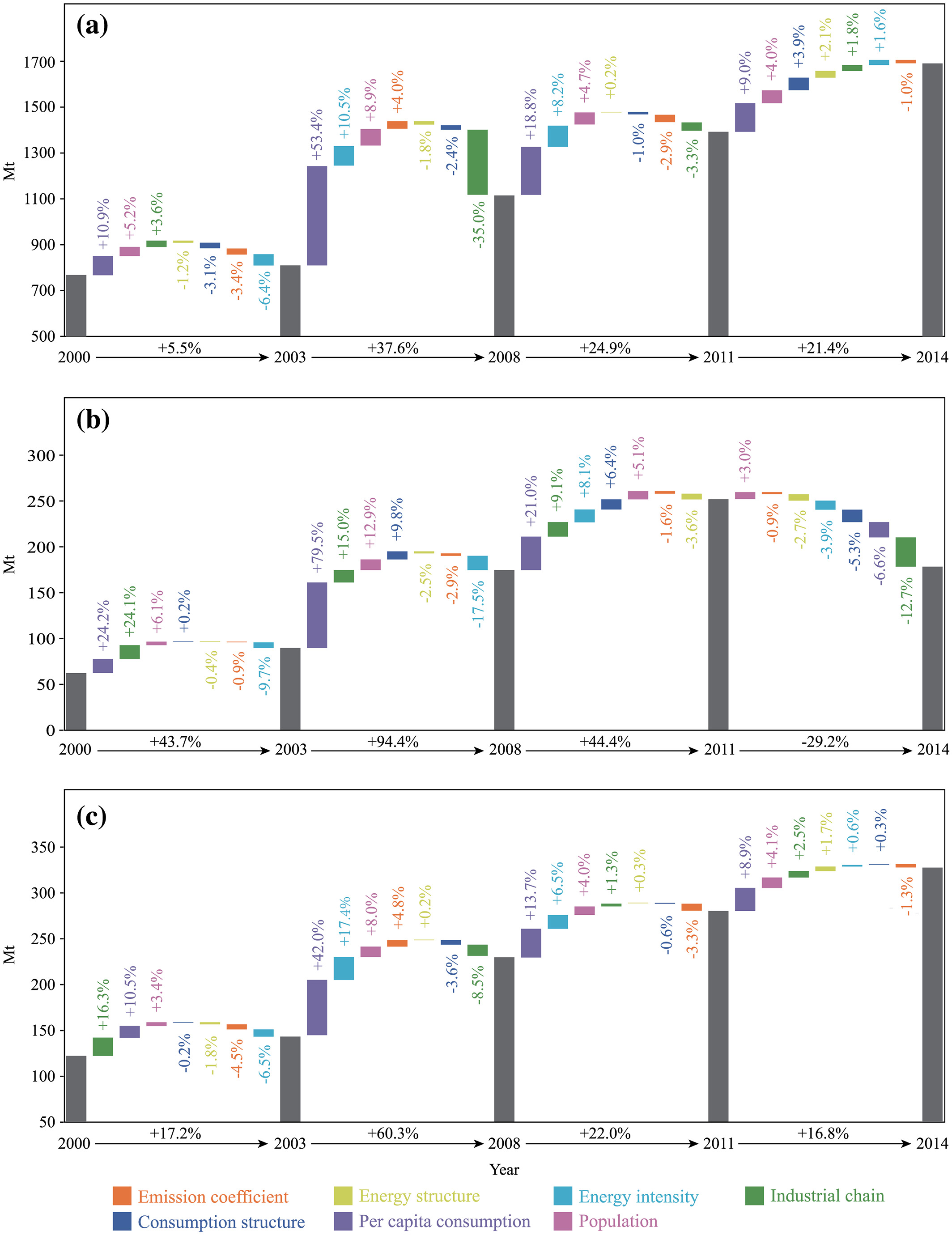
Dynamic driving forces of India's emissions from production and consumption perspectives
While India becomes one of the largest carbon emitters in the world with a high emission growth rate, existing studies fail to capture the recent trends and the key driving factors behind it. Here, by using multiregional input-output analysis and structural decomposition analysis, we measure the contribution of factors to the changes of India's domestic consumption and trade-related emissions. This study finds that India's per capita co...
-
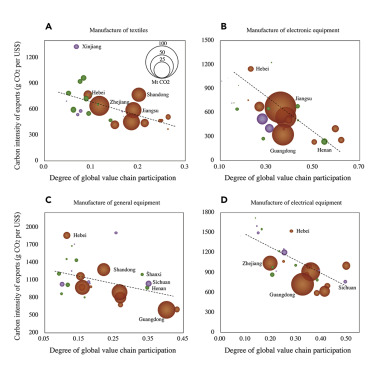
Production Globalization Makes China’s Exports Cleaner
Production globalization, which is when firms expand their supply chains across national boundaries, creates an opportunity for developing countries to engage in international production networks via trade. Described as the world's factory, China specializes in assembly manufacturing mainly through processing exports. Firms use imported intermediate inputs for production and, after processing or assembly, re-export the finished products ...
-
Kazakhstan's CO2 emissions in the post-Kyoto Protocol era: Production- and consumption-based analysis
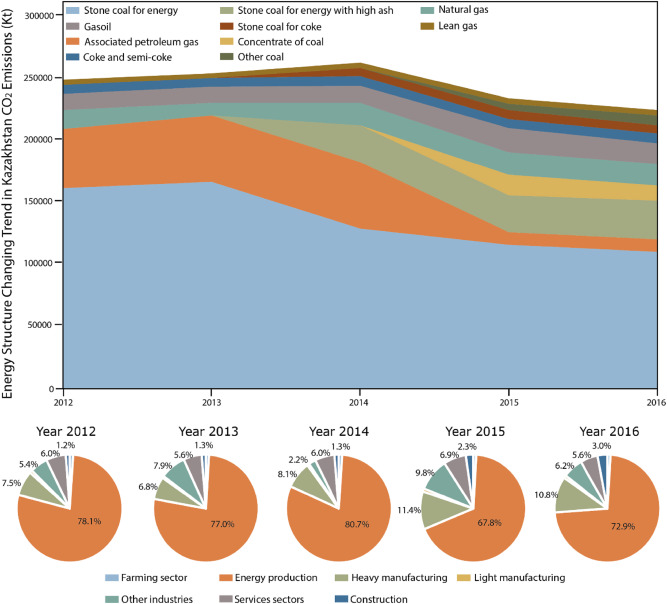
The first commitment period of the Kyoto Protocol came to an end in 2012 and more developing countries began to participate in the new phase of world carbon emission reduction. Kazakhstan is an important energy export country and a pivot of the “Belt and Road Initiative” (BRI). Despite its emissions are relatively small compared with huge emitters such as China and the US, Kazakhstan also faces great pressure in terms of CO2 emission...
-
Energy and air pollution benefits of household fuel policies in northern China
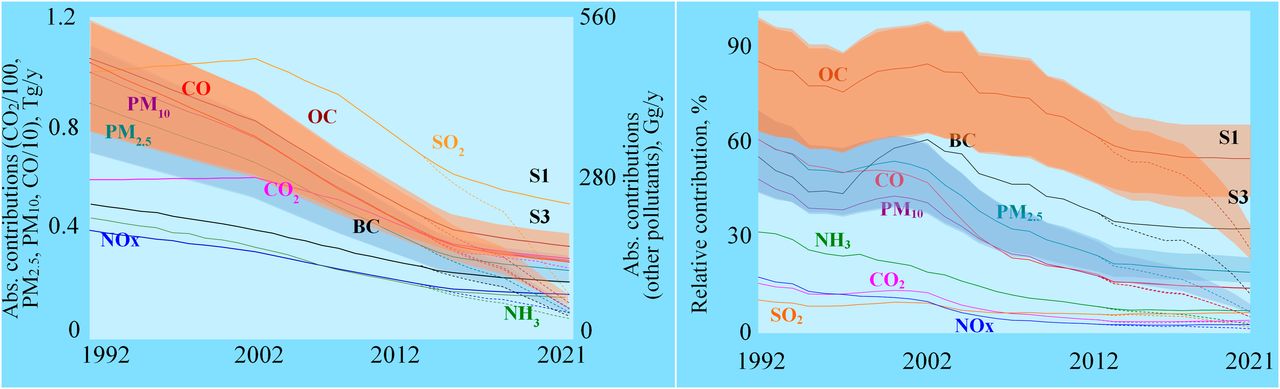
In addition to many recent actions taken to reduce emissions from energy production, industry, and transportation, a new campaign substituting residential solid fuels with electricity or natural gas has been launched in Beijing, Tianjin, and 26 other municipalities in northern China, aiming at solving severe ambient air pollution in the region. Quantitative analysis shows that the campaign can accelerate residential energy transition si...
-
Peak cement‐related CO2 emissions and the changes in drivers in China
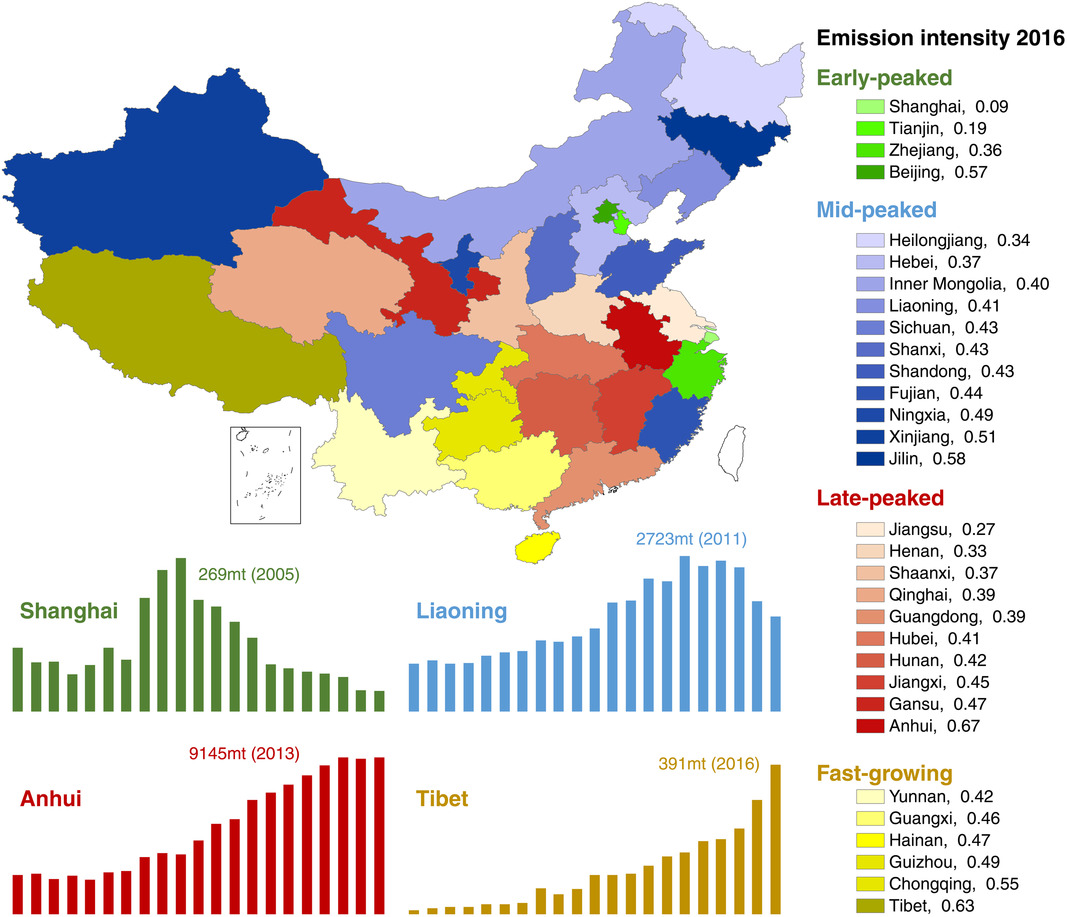
In order to fight against the climate change, China has set a series of emission reduction policies for super-emitting sectors. The cement industry is the major source of process-related emissions, and more attention should be paid to this industry. This study calculates the process-related, direct fossil fuel–related, and indirect electricity-related emissions from China's cement industry. The study finds that China's cement-related ...
-

CEADs合作:量化公海范围内船舶碳排放与减排手段解析
引言 由中国科学院数学与系统科学研究院汪寿阳教授团队领衔与CEADs团队合作的研究工作“The Climate Impact of High Seas Shipping”最近在《国家科学评论》National Science Review上刊发。美国波士顿大学商学院李育泽博士研究生,大连海事大学综合交通运输协同创新中心贾鹏教授,中国科学院大学经济与管理学院姜尚荣博士研究生为共同第一作者...
-

CEADs研究提出全球气候变化减排的新视角
背景 化石燃料产生的二氧化碳排放(以下简称“碳排放”)是全球变暖的主要原因之一。以往,政府和学界主要关注拥有庞大经济和人口规模的排放大国,而相对忽略了诸多中小新型经济体的碳排放问题。近日,清华大学地球系统科学系教授关大博带领的国际团队发布的《新兴经济体二氧化碳排放报告2022》和最新研究成果提出了全球...
-
CEADs研究:能源政策在亚太新兴经济体能源转型中的作用
研究背景 亚太新兴经济体能源转型 新兴经济体正在影响着经济增长和能源消费,它们在世界格局中扮演着越来越重要的角色。亚太地区(APAC)最近一直是全球经济发展和能源需求最活跃的地区,但其清洁能源转型却相对滞后,其中新兴经济体(约占80%)应负主要责任。 在过去二十年中,亚太新兴经济体推行了一系列实现能源转型的...