
多尺度差异化气候减缓路径
-
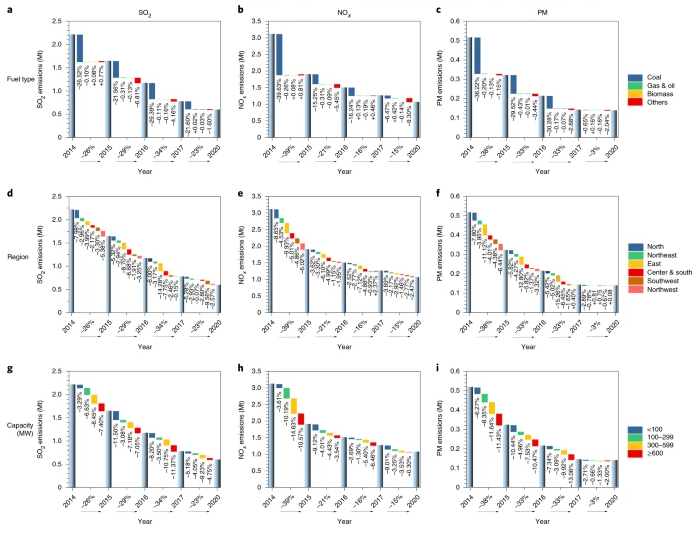
Substantial emission reductions from Chinese power plants after the introduction of ultra-low emissions
In 2014, China introduced an ultra-low emissions (ULE)standards policy for renovating coal-fired power-generating units to limit SO2,NOx and particulate matter (PM) emissions to 35, 50 and 10 mg m−3, respectively. The ULEstandard policy had ambitious levels (surpassing those of all other countries)and implementation timeline. We estimate emission reductions associated withthe ULE policy by constructing a nationwide, unit-level, hou...
-
CEADS团队发文揭示全球现有能源基础设施排放威胁1.5℃全球温控目标
联合国政府间气候变化专门委员会(IPCC)于2018年10月8日发布《IPCC全球升温1.5℃ 特别报告》(以下简称《报告》)。《报告》评估了全球温升1.5℃可能带来的影响以及实现1.5℃温控目标的减排路径。《报告》指出,如今全球气温较工业化前水平上升约1℃;全球升温1.5℃最快可能在2030年达到,1.5℃温控目标下全球仅剩余420-580 Gt CO2的排...
-
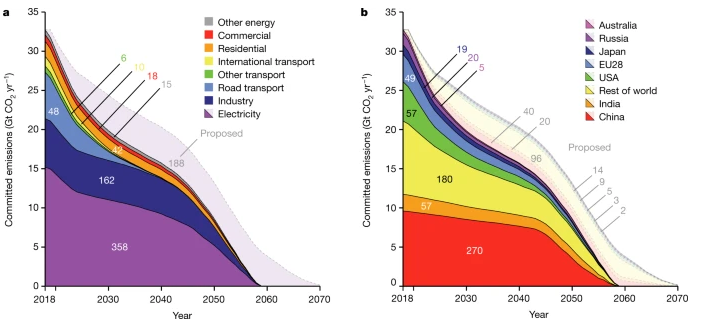
Committed emissions from existing energy infrastructure jeopardize 1.5℃ climate target
Net anthropogenic emissions of carbondioxide (CO2) must approach zero by mid-century (2050) in order to stabilizethe global mean temperature at the level targeted by international efforts. Yetcontinued expansion of fossil-fuel-burning energy infrastructure impliesalready‘committed’future CO2 emissions. Here we use detailed datasets of existingfossil-fuel energy infrastructure in 2018 to estimate regional and sectoralpatterns of comm...
-

CEADs在《自然》撰文讨论政府和企业是实现2020年全球低碳转型的重要载体
伴随着全球碳排放量的持续增加,政府、企业和决策者纷纷在减排行动中采取了多种技术手段,这些手段得到了来自世界各地的气候变化关注者们的支持和拥护,大家将共同致力于在2020年之前大幅度提升气候目标。 联合国气候变化框架公约(UNFCCC)前秘书长、现"使命2020"(Mission 2020)运动召集人兼全球市长联盟盟副主席Christiana Figu...
-
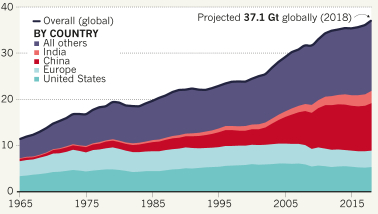
Emissions are still rising: ramp up the cuts
With sources of renewable energy spreading fast, all sectors can do more to decarbonize the world, argue Christiana Figueres and colleagues. Representatives of 190 nations gather this week to review progress at the annual United Nations climate talks. They face a daunting reality: carbon dioxide emissions from fossil fuels are rising again. ...
-
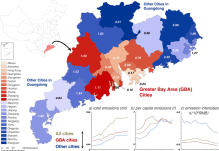
Emissions and low-carbon development in Guangdong-Hong Kong-Macao Greater Bay Area cities and their sur
Cities are the major contributors to energy consumption and CO 2 emissions, as well as being leading innovators and implementers of policy measures in climate change mitigation. Guangdong-Hong Kong-Macao Greater Bay Area (GBA) is an agglomeration of cities put forward by China to strengthen international cooperation among “Belt and Road” countries and promote low-carbon, inclusive, coordinated and sustainable development. Few studies...
-
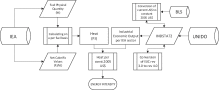
Energy and carbon intensity: A study on the cross-country industrial shift from China to India and SE A
The potential relocation of various industrial sectors from China to India and countries of the SE Asian region presents low cost opportunities for manufacturers, but also risks rising for energy demand and CO 2 emissions. A cross-country shift of industrial output would present challenges for controlling emissions since India and SE Asian countries present higher industrial emissions intensity than China. We find that although there is...
-
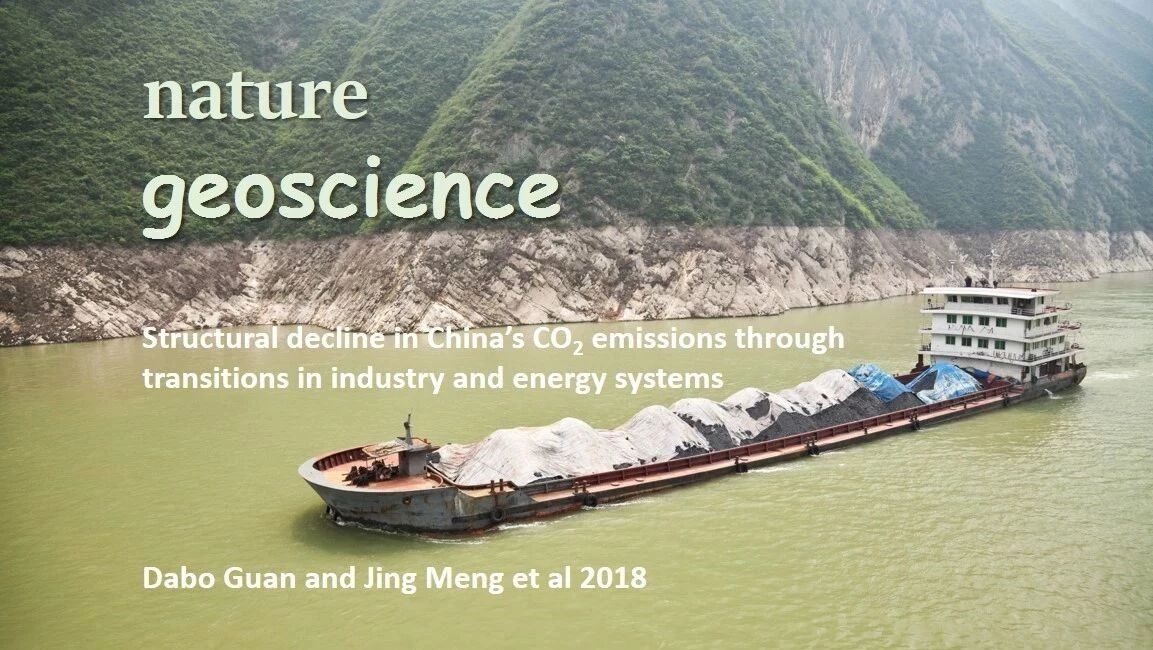
CEADs团队在《自然•地球科学》撰文讨论中国碳排放提前达峰及其驱动因素分析
作为“巴黎协定”的一部分,中国承诺到2030年实现二氧化碳排放量达峰。作为世界上最大的碳排放国家,中国的碳排放趋势将直接影响全球的碳减排进程以及全球气候变化。CEADs 团队一直致力于中国碳排放的研究,开发并免费发布中国国家级,省区级以及城市级排放清单。所有排放清单包含17种化石燃料以及7种工业过程的相关排放,...
-
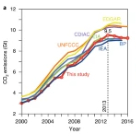
Structural decline in China’s CO2 emissions through transitions in industry and energy systems
As part of the Paris Agreement, China pledged to peak its CO 2 emissions by 2030. In retrospect, the commitment may have been fulfilled as it was being made—China’s emissions peaked in 2013 at a level of 9.53 gigatons of CO 2 , and have declined in each year from 2014 to 2016. However, the prospect of maintaining the continuance of these reductions depends on the relative contributions of different changes in China. Here, we quantita...
-
The global CO2 emission cost of geographic shifts in international sourcing
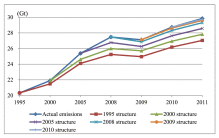
In this paper we simulated the global direct CO 2 emission cost of geographic shift of international sourcing for the period 1995–2011 by comparing the scenarios with and without geographic shift. Our simulations indicate that in 2011, had the share of trade by the sourcing economy remained at the level of 1995, 2000, 2005, and 2008 whereas the global final demand remained the same, global CO 2 emissions in production processes would h...