
气候风险评估与适应路径
-
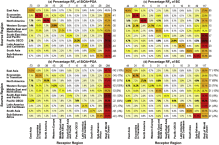
Socioeconomic and atmospheric factors affecting aerosol radiative forcing: Production-based versus cons
There exist substantial differences in top-of-atmosphere direct radiative forcing of aerosols due to a region's economic production (RF p ) and consumption (RF c ), in the context of economic globalization, trade and globalizing air pollution. Yet an explicit systematic analysis of all socioeconomic and atmospheric factors determining the RF difference is lacking. Here, we evaluate five socioeconomic (population, per capita output, emiss...
-

CEADs 研究:京津冀13个城市中全行业“水能耦合”分析
水能耦合在国际环境领域的关注度稳居不下。水资源的质量、数量和可获取性都和能源的定价、多样性、稳定性和可持续发展息息相关,而受制的能源也会局限清洁水的生产。在当前全球环境变化和全球贸易的大背景下,水能耦合的影响范围逐步扩大,而中国的问题尤为突出。中国自然灾害种类多、灾情重,无疑会重创水能行业。并且...
-
CEADs研究:气候变化对全球大麦产量及啤酒市场的影响
食物是维系生命的“能源”,人类食物消费已从“吃饱”向“吃好”转变。“吃得开心”等饮食文化逐渐成为食物消费的新标准。尽管目前有关气候变化对农业及农产品市场的研究主要关注粮食,但鉴于显著的气候变化将发生在人类饮食结构进一步变化的2050年或2100年,我们除了关注气候变化对口粮等粮食作物的影响,也应该关注气候...
-
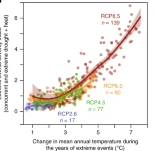
Decreases in global beer supply due to extreme drought and heat
Beer is the most popular alcoholic beverage in the world by volume consumed, and yields of its main ingredient, barley, decline sharply in periods of extreme drought and heat. Although the frequency and severity of drought and heat extremes increase substantially in range of future climate scenarios by five Earth System Models, the vulnerability of beer supply to such extremes has never been assessed. We couple a process-based crop model...
-
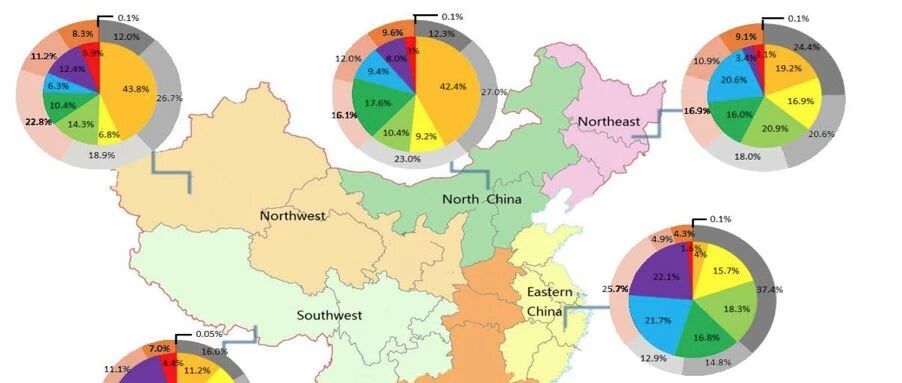
CEADs研究:“空气污染—健康—经济”传导效应评估
近年来,空气污染已经成为中国最严重的环境问题之一。严重的空气污染将大大提高人们罹患呼吸系统和心血管疾病的风险,成为危害人们身体健康的隐形杀手。由空气污染所带来的长期健康影响,也将通过生产性劳动力和劳动时间的减少,威胁中国社会经济的可持续发展。关于“污染—健康—经济”联结的已有研究大多局限于微观个...
-
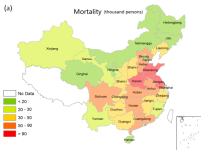
Assessment of the pollution–health–economics nexus in China
Serious haze can cause contaminant diseases that trigger productive labour time by raising mortality and morbidity rates in cardiovascular and respiratory diseases. Health studies rarely consider macroeconomic impacts of industrial interlinkages while disaster studies seldom involve air pollution and its health consequences. This study adopts a supply-driven input–output model to estimate the economic loss resulted from disease-induced...
-
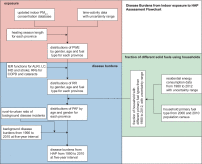
Estimating household air pollution exposures and health impacts from space heating in rural China
Exposure to and the related burden of diseases caused by pollution from solid fuel cooking, known as household air pollution (HAP), has been incorporated in the assessment of the Global Burden of Diseases (GBD) project. In contrast, HAP from space heating using solid fuels, prevalent in countries at middle or high altitudes , is less studied and missing from the GBD assessment. China is an ideal example to estimate the bias of exposure ...
-
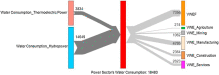
Categorising virtual water transfers through China’s electric power sector
Water consumption in thermoelectric and hydropower plants in China increased from 1.6 and 6.1 billion m 3 , respectively, to 3.8 and 14.6 billion m 3 from 2002 to 2010. Using the concept of virtual water, we attribute to different electricity users the total water consumption by the electric power sector. From 2002 to 2010, virtual water embodied in the final consumption of electricity (hereinafter referred to as VWEF) increased from 1.9...
-
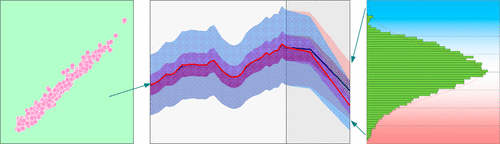
Distinguishing Emission-Associated Ambient Air PM2.5 Concentrations and Meteorological Factor-Induced F
Although PM 2.5 (particulate matter with aerodynamic diameters less than 2.5 μm) in the air originates from emissions, its concentrations are often affected by confounding meteorological effects. Therefore, direct comparisons of PM 2.5 concentrations made across two periods, which are commonly used by environmental protection administrations to measure the effectiveness of mitigation efforts, can be misleading. Here, we developed a two-...
-
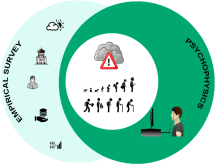
A review of air pollution impact on subjective well-being: Survey versus visual psychophysics
Air pollution is a worldwide environmental and health issue, especially in major developing countries. A recent World Health Organization report shows about 3 million deaths in the world in 2012 are due to ambient air pollution and China and India are the countries with the most severe challenge. Air pollution influences people's thought and experience of their lives directly by visual perceptions. This reduces people's subjective well-...