
气候风险评估与适应路径
-
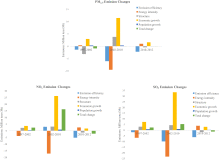
Driving forces of Chinese primary air pollution emissions: an index decomposition analysis
Emissions of the fine particulate matters (diameter of 2.5μm or less) caused by both the primary particle emissions and the precursor emission sources such as sulfur dioxide and nitrogen oxides , have contributed significantly to poor urban air quality in China, and have attracted tremendous public attention over the past few years. This study provides an interdisciplinary study to investigate the key contributors driving air pollution ...
-
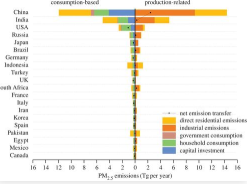
Globalization and pollution: tele-connecting local primary PM2.5 emissions to global consumption
Globalization pushes production and consumption to geographically diverse locations and generates a variety of sizeable opportunities and challenges. The distribution and associated effects of short-lived primary fine particulate matter (PM 2.5 ), a representative of local pollution, are significantly affected by the consumption through global supply chain. Tele-connection is used here to represent the link between production and consump...
-
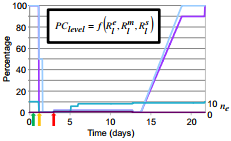
SESAME: Exploring small businesses’ behaviour to enhance resilience to flooding
In the United Kingdom, small and medium sized enterprises (SMEs) account for approximately 99.9% of businesses, 60% of the working population and 47% annual turnover. However, despite the important contribution that SMEs make to the economy, this size of business remains under-researched with a significant gap in understanding how the disruption caused by flooding impacts on SMEs from the time at which a flood event occurs through to th...
-
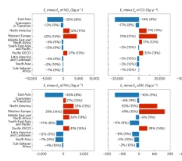
Global climate forcing of aerosols embodied in international trade
International trade separates regions consuming goods and services from regions where goods and related aerosol pollution are produced. Yet the role of trade in aerosol climate forcing attributed to different regions has never been quantified. Here, we contrast the direct radiative forcing of aerosols related to regions’ consumption of goods and services against the forcing due to emissions produced in each region. Aerosols assessed in...
-
Assessment of socioeconomic costs to China’s air pollution
Particulate air pollution has had a significant impact on human health in China and it is associated with cardiovascular and respiratory diseases and high mortality and morbidity. These health impacts could be translated to reduced labor availability and time. This paper utilized a supply-driven input-output (I-O) model to estimate the monetary value of total output losses resulting from reduced working time caused by diseases related to...
-

Risk assessment of oil price from static and dynamic modelling approaches
The price gap between West Texas Intermediate (WTI) and Brent crude oil markets has been completely changed in the past several years. The price of WTI was always a little larger than that of Brent for a long time. However, the price of WTI has been surpassed by that of Brent since 2011. The new market circumstances and volatility of oil price require a comprehensive re-estimation of risk. Therefore, this study aims to explore an integr...
-
Interprovincial Reliance for Improving Air Quality in China: A Case Study on Black Carbon Aerosol
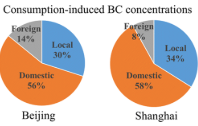
Black carbon (BC) is of global concern because of its adverse effects on climate and human health. It can travel long distances via atmospheric movement and can be geographically relocated through trade. Here, we explored the integrated patterns of BC transport within 30 provinces in China from the perspective of meteorology and interprovincial trade using the Weather Research and Forecasting with Chemistry (WRF/Chem) model and multiregi...
-
China's toxic informal e-waste recycling: local approaches to a global environmental problem
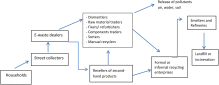
Electronic waste or e-waste has been an increasingly severe problem over the last decade, and is the fastest growing waste stream in the world. China's inexpensive labour and manufacturing abilities have already made it “the world's factory” and for e-waste recycling it is no exception. Informal workers do the majority of e-waste collection and recycling in cities throughout China. E-waste recycling work provides livelihoods for mig...
-
EU-wide economic valuation of adaptation to climate change
Within the BASE project the economic effects of adaptation to climate change are systematically evaluated both from a bottom up and top down perspective. This is done by integrating sectoral models and economic models at EU and global scale with information from selected case studies across sectors and regions within Europe. In addition this layered approach builds upon previous studies that have either focused on a top down modelling or...
-
China’s rising hydropower demand challenges water sector
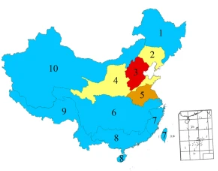
Demand for hydropower is increasing, yet the water footprints (WFs) of reservoirs and hydropower and their contributions to water scarcity, are poorly understood. Here, we calculate reservoir WFs (freshwater that evaporates from reservoirs) and hydropower WFs (the WF of hydroelectricity) in China based on data from 875 representative reservoirs (209 with power plants). In 2010, the reservoir WF totaled 27.9 × 10 9 m 3 (Gm 3 ), or 22...